
If you keep pulling your knee toward your chest against a wall and the pinch in the front of your hip never quite goes away, the stretch is not the problem you think it is. Stop stretching your hip flexor for hip pain when the discomfort keeps returning, worsens with pinching or catching, or shows up more with weakness than tightness, and shift toward strengthening and load management instead. Stretching a hip flexor that is not actually short rarely changes anything long-term.
Tight hip flexors get blamed for a wide range of front-of-hip complaints, from anterior hip pain during running to a stiff feeling after a long day at a desk. The instinct to stretch makes sense: the muscle feels tight, so you lengthen it. But that tight sensation often reflects fatigue, protective guarding, or a joint that is irritated, not a hip flexor that is genuinely shortened. Stretching in those cases can bring temporary relief and then let the same tightness creep right back.
This matters more for people who are active. Runners, lifters, and anyone doing lunges or squats load the hip flexors repeatedly, and a strain, tendon irritation, or joint issue can hide behind what feels like simple tightness. Knowing when to back off the stretch and when a stretch is still useful changes how quickly hip pain actually resolves.
When Should You Stop Stretching a Painful Hip?
Stop reaching for hip flexor stretches once a stretch reproduces sharp pain, pinching, or a catching sensation instead of a normal stretch feeling. Hip flexor stretching is meant to create a mild pulling sensation through the front of the thigh or hip, not a sharp or electric feeling that lingers afterward. If a stretch consistently triggers anterior hip pain that spreads toward the groin or down toward the knee, that is a signal to change course rather than push through.
Pain Signals That Make a Stretch a Bad Bet
Sharp, localized pain, pinching at the front of the hip, or pain that radiates into the groin during a stretch are all reasons to stop that stretch immediately. So is pain that spikes with walking or running afterward rather than easing. A stretch that leaves you limping slightly for the next few steps is not doing its job.
Hip Flexor Strain vs. Post-Exercise Soreness
A hip flexor strain tends to feel like a specific, reproducible pain when you lift your knee against resistance, often following a single identifiable movement like a sprint start or an awkward lunge. Ordinary post-exercise soreness feels more diffuse, eases within a day or two, and does not worsen with light activity. If resisted hip flexion consistently reproduces sharp, localized pain, treat it as a possible strain rather than routine tightness.
When Hip Pain Needs Medical Assessment
Hip pain deserves a professional look when it is accompanied by clicking, catching, a sense the hip might give way, or pain that does not shift with rest, activity changes, or a few weeks of conservative care. Snapping sensations around the hip can come from snapping hip syndrome, where a tendon (often the iliopsoas) catches over a bony prominence, and appropriate management sometimes includes addressing hip flexor weakness rather than simply stretching it out, as described in this overview of snapping hip syndrome. Persistent night pain, swelling, or pain following a fall also warrants a prompt evaluation.
Why a Tight Feeling Does Not Always Mean a Short Muscle
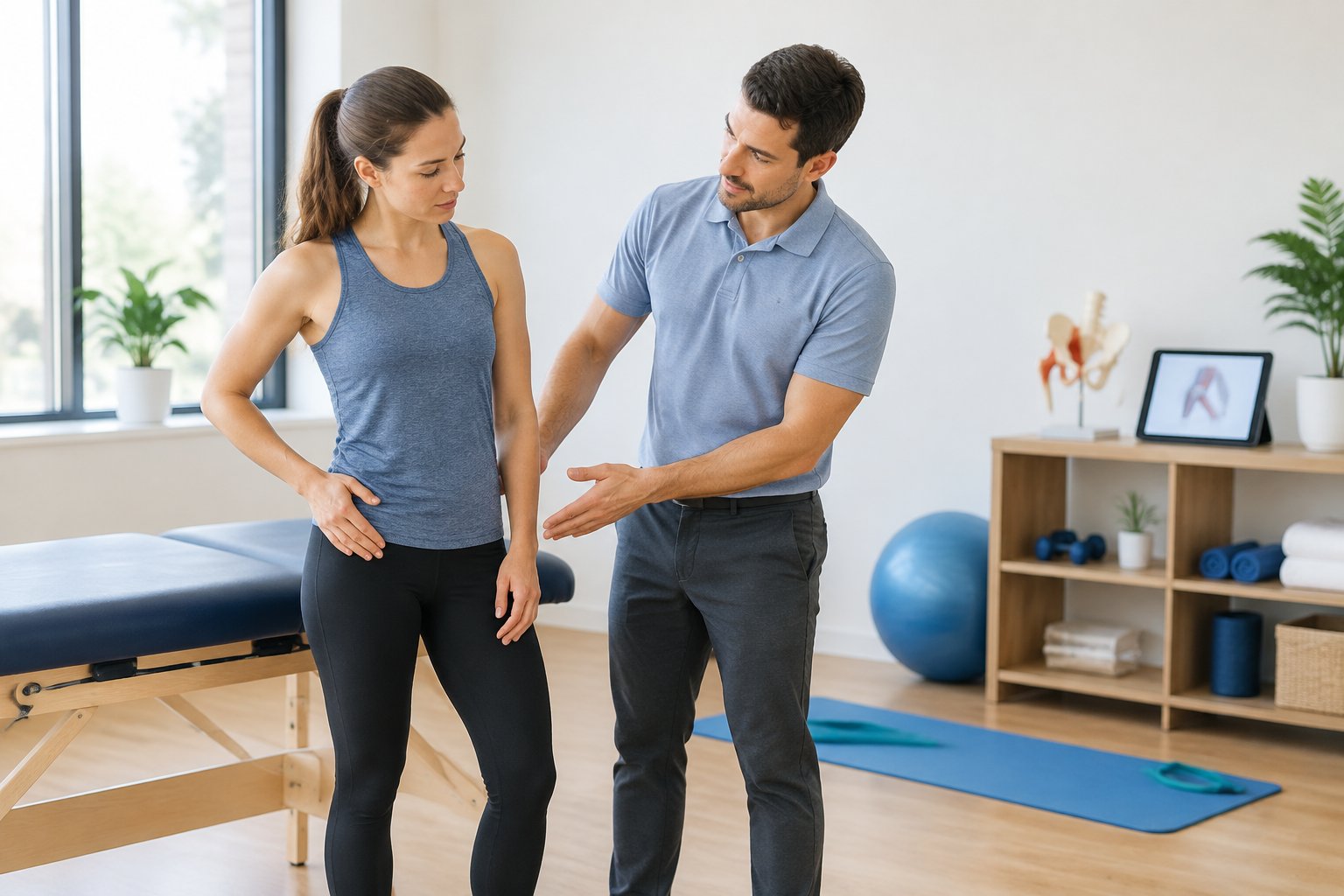
A tight-feeling hip flexor is frequently a strength or control issue disguised as a flexibility problem. The nervous system can generate a protective tightening around a joint that is irritated or unstable, and a muscle that is fatigued or under-strengthened relative to its workload can feel just as tight as one that is genuinely short.
How the Nervous System Creates Protective Tightness
The nervous system tightens muscles around a joint it perceives as vulnerable, independent of actual muscle length. This protective guarding is a normal response to irritation or instability, not a sign that stretching harder will help. Pushing a stretch further in this situation usually just re-triggers the same guarding response.
Weakness, Fatigue, and Poor Load Sharing
Hip flexors that are weak relative to the demands placed on them (long runs, repeated stair climbing, heavy squats) often feel tight because they are working closer to their capacity on every rep. Poor load sharing between the hip flexors, glutes, and trunk muscles asks the hip flexors to do more than their share, and that overuse can feel identical to shortness. Building hip flexor strength and improving how effort is distributed across the hip often resolves the tight feeling more reliably than another round of stretching.
The Role of the Psoas in Hip and Trunk Control
The psoas major, working alongside the iliacus as part of the iliopsoas complex, is the primary hip flexor and also plays a role in stabilizing the femoral head within the hip socket, according to clinical practice guidelines for nonarthritic hip joint pain from the orthopaedic section of the American Physical Therapy Association. Because the psoas crosses both the hip and the lower spine, its tension is tied to posture and anterior pelvic tilt as well as hip mechanics. The rectus femoris, the other major hip flexor, crosses the knee too, which is part of why hip flexor issues sometimes show up as knee discomfort during activities like running.
Could the Pain Be Coming From the Hip Joint Instead?
Front-of-hip pain that feels like a tight hip flexor sometimes originates inside the hip joint itself, particularly with femoroacetabular impingement (FAI) or labral irritation. In FAI, extra bone on the femoral head or the acetabulum (hip socket) causes the two surfaces to pinch against each other during certain movements, especially deep hip flexion combined with internal rotation.
Pinching, Catching, and Other Signs to Take Seriously
A pinching sensation at the front of the hip crease, a catching or locking feeling, or a deep ache that flares with sitting low (like a low chair or a car seat) are signs worth taking seriously. Clicking or catching combined with a sense the hip could give way often points toward labral irritation rather than simple muscle tightness, and forceful stretching does not resolve that kind of joint-level irritation; it frequently reproduces the same pinching sensation, according to this discussion of labral tears and hip flexor stretching.
How FAI and Labral Irritation Can Mimic Tight Hip Flexors
FAI and labral irritation both sit at the front of the hip joint, in the same general area where a tight hip flexor is felt, which makes the two easy to confuse. Both can produce a pulling or tight sensation with hip flexion, and both can temporarily feel better after a stretch that momentarily eases joint compression, only for the sensation to return.
Why End-Range Positions Can Flare Anterior Hip Pain
Deep hip flexion positions, like the bottom of a lunge or a deep squat, combine flexion with internal rotation and can compress a joint that is already irritated. Movements that combine hip flexion with rotation increase intracapsular pressure, which can aggravate joint structures that are sensitive, consistent with findings on hip flexion mechanics and joint loading. Backing off end-range lunges and deep squats temporarily, while keeping the hip moving through a comfortable range, tends to calm this kind of flare better than a deeper stretch.
What to Do Instead of Repeated Hip Flexor Stretching
Building hip flexor strength and control within a comfortable range of motion addresses the tightness at its source more reliably than another stretching session. That means temporarily easing off positions that flare symptoms, adding targeted core and hip control exercises, and adjusting the loads from running, lifting, and sitting that may be driving the irritation.
Use a Symptom-Guided Break From Aggravating Positions
A short, deliberate break from the specific positions that reproduce pinching or sharp pain, deep lunges, low squats, or long stretch holds, gives an irritated hip flexor or joint room to settle. This is not the same as full rest; walking and daily movement generally continue. The goal is avoiding the specific end ranges that consistently reproduce symptoms for a couple of weeks while everything else stays active.
Build Control With Dead Bugs and a Psoas March
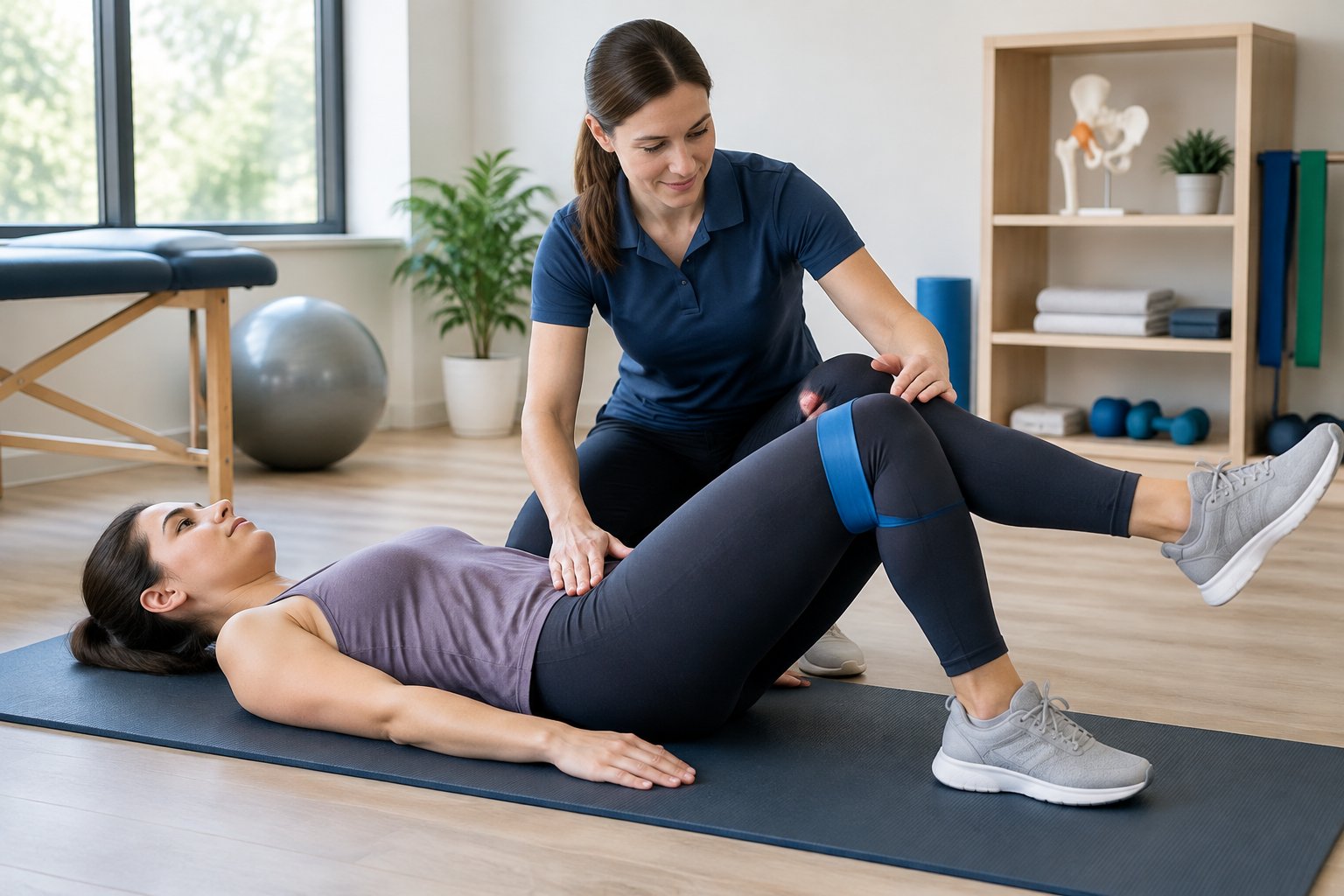
Dead bugs train the deep core to control the pelvis while the legs move, which takes some of the stabilizing burden off the hip flexors themselves. A psoas march, lying on your back and lifting one knee toward your chest with control while keeping the low back steady, trains hip flexor strength through a comfortable range without forcing end-range stretch. Both exercises reward slow, controlled reps over speed.
Restore Strength Through a Comfortable Full Range of Motion
Once symptoms settle, working the hip flexors through a full range of motion under control, rather than under passive stretch, helps rebuild both mobility and strength together. This might look like slow, controlled leg raises or step-ups progressing gradually into more demanding hip flexion work. Programs that pair stretching with active conditioning in the new range tend to hold onto mobility gains better than stretching alone, an idea echoed in this breakdown of why stretching alone often falls short for hip flexors.
Adjust Running, Lifting, and Daily Sitting Loads
Reducing stride length slightly, shortening long runs temporarily, or trimming the depth of squats and lunges can lower the cumulative load on an irritated hip flexor while strength work catches up. Long sitting stretches the hip flexors into constant shortening and can contribute to that stiff, tight feeling on standing. Standing up every 30 to 45 minutes and walking briefly gives the hip flexors a change of position throughout the day, which some clinicians recommend as part of a practical approach to hip flexor pain.
When Stretching Can Still Be Useful
Stretching still has a place once true motion loss is confirmed and symptoms are calm, particularly for hip extension range that has been restricted by prolonged sitting or postural habits. The key is checking whether the range is actually limited before assuming a stretch is the fix.
How to Check Whether Mobility Is Actually Limited
Comparing hip extension side to side, lying on your stomach or standing in a split stance and noticing whether one hip reaches the same range as the other, gives a rough sense of whether a genuine limitation exists. A hip that reaches full, symmetrical extension without pain is unlikely to benefit much from more stretching, even if it still feels tight.
Using the Thomas Test Carefully
The Thomas test, lying on your back with one knee pulled to the chest while the other leg hangs off the edge of a table, is a common clinical check for hip flexor length and can suggest anterior pelvic tilt or tightness if the hanging leg cannot reach the table. Self-testing at home can offer a rough clue, but it is easy to misread guarding or hip joint irritation as tightness on this test, so a professional assessment offers more reliable answers, particularly when pain accompanies the test, as outlined in this guide to distinguishing hip flexor strain from hip joint pain.
How to Reintroduce Gentle Hip Flexor Stretches
Once strength work is underway and daily symptoms have settled, gentle versions of the kneeling hip flexor stretch, standing hip flexor stretch, or couch stretch can be reintroduced at a mild intensity, well short of pinching or sharp pain. Pigeon pose and deeper variations are best saved until a fuller range of motion is comfortable and pain-free during daily activity. Pairing any stretch with active strengthening in that new range helps the gain hold rather than fade within days.
Support the Hip With Strength, Not Forced Range
Hip flexors respond better to graded strength work than to repeated forced stretching, especially when hip pain, pinching, or hip flexor tightness keep resurfacing. Building strength through a comfortable range of hip flexion, rather than chasing extra hip mobility with harder stretches, addresses weakness and poor load-sharing at their root. For most people with recurring anterior hip discomfort, a short break from aggravating positions, targeted control exercises, and gradual reloading of running, lifting, and daily movement resolve symptoms more reliably than another stretch hold ever will.
Frequently Asked Questions
Should I stretch my hip flexor if it hurts?
Stretching through sharp pain, pinching, or catching is not advisable; those signals suggest the hip joint or an irritated tendon rather than a simple tight muscle. A gentle, mild stretch that stays well below pain is generally fine, but pain during or after a stretch means it is time to back off and address strength and load instead.
What does an overstretched hip flexor feel like?
An overstretched or strained hip flexor often feels like a sharp, localized pull at the front of the hip or groin, sometimes with bruising or swelling in more significant strains. It typically worsens with resisted hip flexion, like lifting the knee against resistance, and can make walking or climbing stairs noticeably uncomfortable for several days.
Why do my hip flexors feel tight after I stretch them?
Tightness returning shortly after a stretch usually means the muscle was never truly short in the first place; the nervous system may be re-tightening the area for protective reasons, or the muscle is fatigued and weak relative to its workload. Stretching a muscle that needs strength rather than length tends to produce only short-lived relief.
Can tight hip flexors cause hip or knee pain?
Tight or overworked hip flexors can contribute to anterior hip pain, and because the rectus femoris crosses the knee, hip flexor issues sometimes show up as knee discomfort during running or squatting. Hip range of motion limitations have also been linked to anterior knee pain in physically active populations.
How long does hip flexor pain take to improve?
Mild hip flexor irritation often eases within one to two weeks with load adjustments and gentle strengthening, while a more significant strain or joint-related issue can take several weeks to months to fully resolve. Progress that stalls beyond a few weeks of consistent effort is a reasonable point to seek a professional assessment.
What exercises can I do instead of hip flexor stretches?
Dead bugs, a controlled psoas march, and slow hip flexion work through a comfortable range build hip flexor strength and control without relying on aggressive stretching. Adjusting running volume, squat and lunge depth, and prolonged sitting time alongside these exercises addresses the load side of the problem at the same time.
Disclaimer: The information provided in this post is for educational purposes only. This is not a substitute for a medical appointment. Please refer to your physician before starting any exercise program.